
Brugmansia This unusual tropical blooming plant is a great summer outdoor blooming specimen for the backyard. It must be brought inside and stored in a frost free garage or basement for the winter
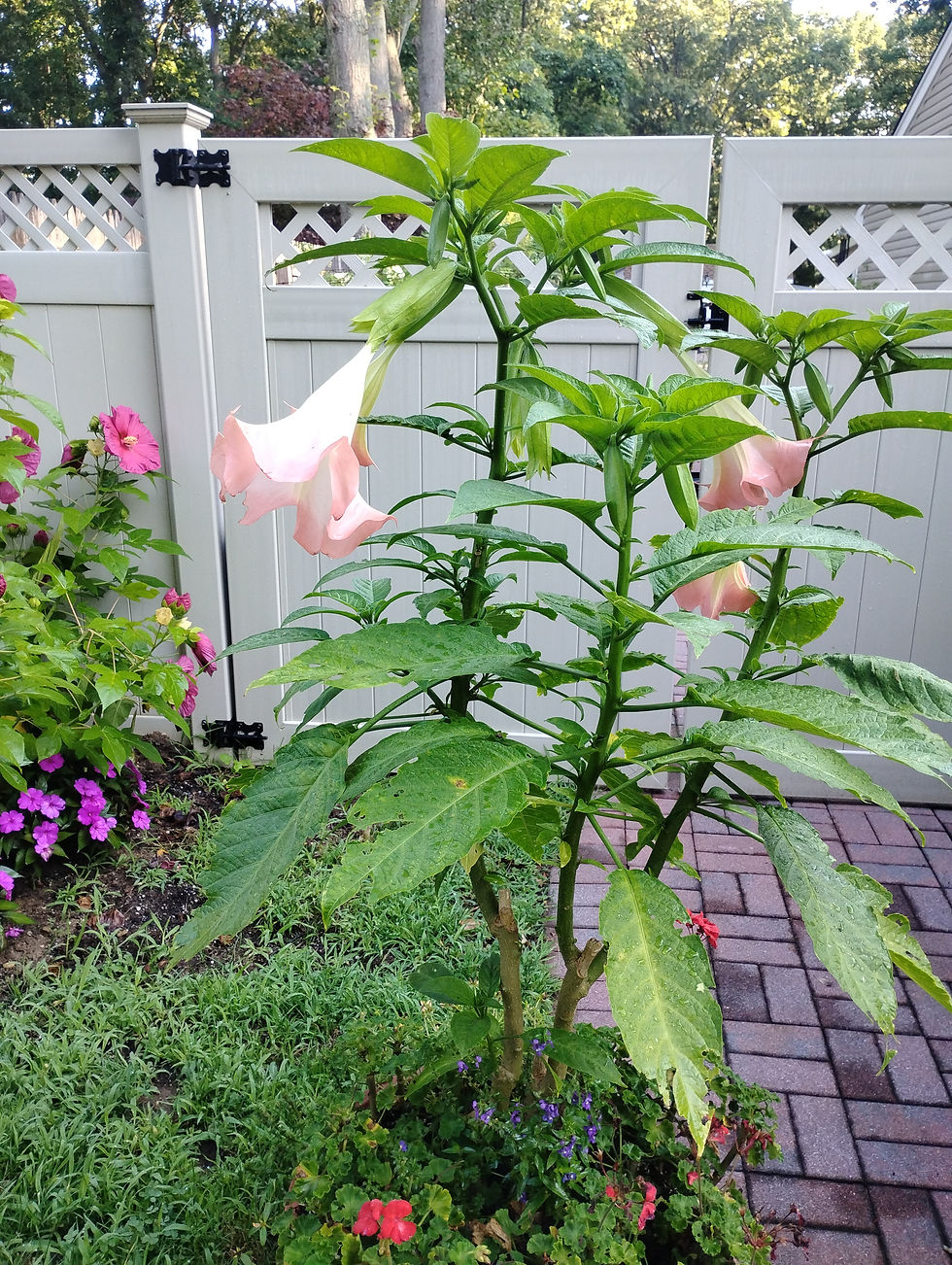
Most Brugmansia are fragrant in the evenings to attract pollinating moths. ] One species lacking scent, the red-flowered Brugmansia sanguinea, is exclusively pollinated by the sword-billed hummingbird. Brugmansia have two main stages to their life cycle. In the initial vegetative stage the young seedling grows straight up, usually on a single stalk, until it reaches its first main fork at (2.6–4.9 ft) high. It will not flower until after it has reached this fork, and then only on new growth above the fork. Cuttings taken from the lower vegetative region must also grow to a similar height before flowering, but cuttings from the upper flowering region will often flower at a very low height.
One example of plant/animal interaction involves the butterfly Placidula euryanassa, which uses Brugmansia suaveolens as one of its main larval foods. It has been shown that these can sequester the plant's tropane alkaloids and store them through the pupal stage on to the adult butterfly, where they are then used as a defense mechanism, making themselves less palatable to vertebrate predators.
Brugmansia seed dispersal was probably formerly accomplished by mammalian megafauna, extinct since the Pleistocene. Brugmansia has long been extinct in the wild as their fruits now shrivel on the plants without progeny. They have been maintained in cultivation as a source of psychotropic drugs, as well as for ornamental purposes, following the loss of their evolutionary seed dispersal partner by humans.[2
Beware! All parts are highly poisonous to humans and pets if ingested.


Comments